What the Ocean Knows: The Neuroscience of Cognitive Renewal Aboard a Luxury Charter Voyage
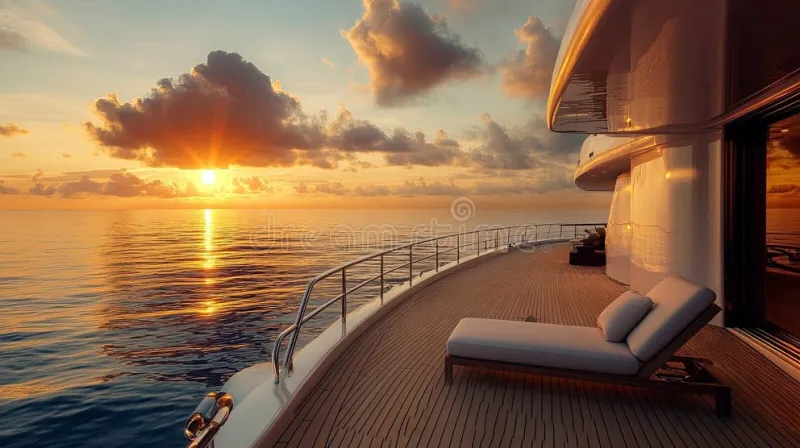
Photo: luxury yacht deck sunrise ocean calm water executive relaxation, via thumbs.dreamstime.com
There is a particular kind of exhaustion that no vacation resort can cure. It is the fatigue that accumulates not in the muscles but somewhere deeper — in the prefrontal cortex, in the decision-making architecture of a mind that has been running at full throttle for years without a genuine pause. Spa weekends address the surface. Long weekends in the mountains help, temporarily. But a growing number of America's most accomplished professionals are discovering that the only environment capable of producing lasting cognitive restoration is one they never anticipated: the open water.
At Prosline Charters, we have witnessed this transformation firsthand across hundreds of extended voyages. What begins as a luxury escape frequently concludes as something far more consequential — a fundamental rewiring of how a person thinks, prioritizes, and perceives the world around them. The science, it turns out, is as compelling as the experience itself.
The Overstimulated Executive Brain
To understand why the sea heals, one must first understand what it is healing. Neurologists and performance psychologists who specialize in executive burnout consistently describe the same profile: a brain trapped in a state of chronic hyperarousal. The prefrontal cortex — responsible for planning, impulse control, and complex reasoning — becomes so persistently engaged that its capacity for genuine insight diminishes. The default mode network, which governs creative thinking, self-reflection, and the synthesis of disparate ideas, is effectively silenced by the relentless demands of professional life.
Dr. Rachel Carmichael, a wellness consultant who works with C-suite executives across the Pacific Northwest, describes it plainly: "The brain was not designed to process the volume of information that modern leadership demands. What my clients call 'brain fog' is often the result of a cognitive system that has simply never been given permission to power down."
The pharmaceutical and wellness industries have proposed countless remedies. What they have largely failed to replicate, however, is the specific constellation of conditions that a multi-day maritime voyage provides naturally.
The Maritime Environment as Neurological Architecture
Researchers studying what marine biologist Wallace J. Nichols termed "blue mind" — the measurable shift in brain state that occurs in proximity to water — have identified several mechanisms that distinguish the ocean environment from any land-based alternative.
Rhythmic sensory input. The oscillation of ocean swells operates at a frequency remarkably similar to the brain's theta wave patterns, which are associated with relaxed alertness and the early stages of creative ideation. Unlike the erratic, unpredictable stimuli of urban environments, the rhythm of the sea is consistent without being monotonous — it provides just enough sensory engagement to prevent restlessness while simultaneously allowing the nervous system to downregulate.
Enforced disconnection. For most charter guests, the voyage represents the first sustained period in years — sometimes decades — during which connectivity to professional obligations is genuinely impossible rather than merely inconvenient. This distinction matters enormously. Research from the University of California, Irvine has demonstrated that the mere possibility of being contacted maintains the brain in a state of low-grade alertness. When that possibility is removed, the neurological relief is measurable within 24 to 48 hours.
Natural light regulation. Aboard a charter vessel, guests experience sunrise and sunset in their unmediated forms, without the interference of artificial lighting that disrupts circadian rhythms. Within three to four days at sea, most guests report a spontaneous normalization of sleep patterns — falling asleep earlier, waking naturally, and experiencing a quality of rest they describe as unlike anything achieved on land.
Voices from the Water
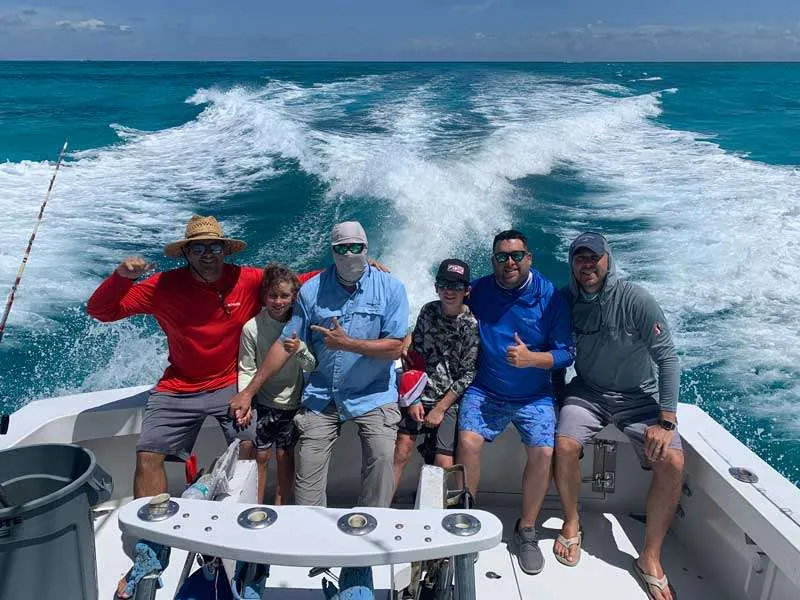
Michael T., a private equity partner based in Chicago who chartered a ten-day voyage through the Florida Keys and Bahamas, describes the experience with characteristic precision: "By day three, I noticed I was thinking in complete thoughts again. Not fragments, not half-formed reactions — actual sustained reasoning. I hadn't realized how fractured my cognition had become until I felt it reassemble."
His account is representative rather than exceptional. Among Prosline Charters guests who have undertaken voyages of five days or longer, the themes that emerge are strikingly consistent: an initial period of discomfort as the nervous system releases its hypervigilance, followed by a gradual deepening of presence, and ultimately a quality of mental clarity that many describe as unprecedented in their adult lives.
Sarah L., a healthcare executive from Boston, was more direct: "I've done meditation retreats. I've worked with executive coaches. Nothing produced the clarity that seven days on the water produced. And I believe it's because the ocean doesn't negotiate — it simply is what it is, and eventually, you stop trying to manage it and start moving with it."
The Architecture of Genuine Rest
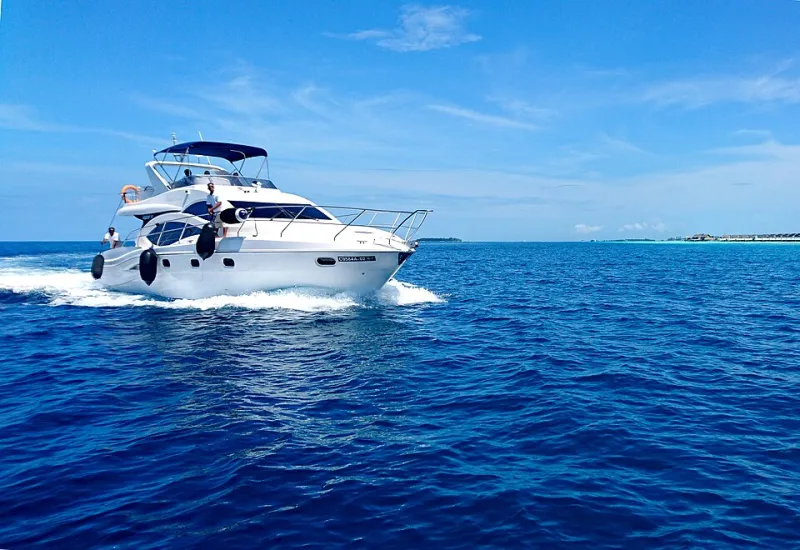
What Prosline Charters provides is not merely transportation across water. It is a carefully constructed environment in which the conditions for neurological recovery are present simultaneously and continuously. The vessel becomes, in effect, a floating laboratory for the restoration of human cognition.
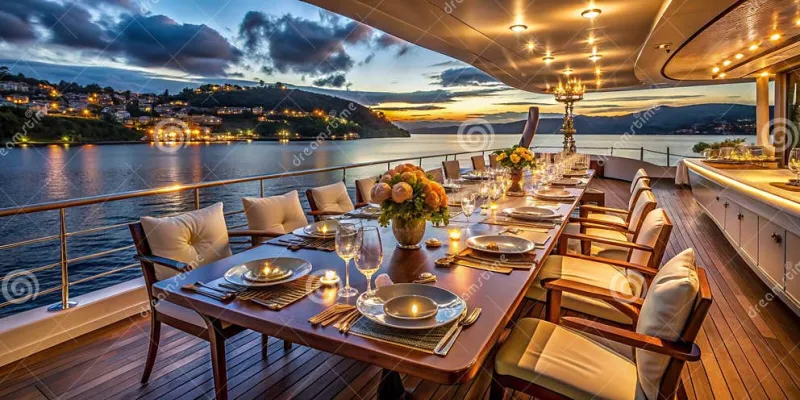
The days aboard have their own natural structure: the early morning watch, the unhurried breakfast, the afternoon light shifting across the water, the evening meal taken as the sun descends. This structure is organic rather than imposed, which is precisely what makes it effective. The brain, so long governed by external schedules and artificial urgency, rediscovers its own internal rhythm.
Wellness practitioners who work with executives specifically recommend extended maritime experiences for clients who have not responded to conventional recovery modalities. The combination of physical movement (the body is constantly making micro-adjustments to the motion of the vessel), sensory immersion, and genuine disconnection creates conditions that cannot be approximated on land.
Returning Different
Perhaps the most remarkable aspect of the extended charter experience is not what happens during the voyage but what persists afterward. Guests consistently report that the clarity achieved at sea does not dissipate immediately upon return. Many describe a sustained shift in perspective — a recalibrated sense of what genuinely requires their attention and what does not.
This is not coincidental. Neuroplasticity research suggests that sustained exposure to novel, low-stress environments can produce lasting changes in the brain's default patterns of response. The ocean, in its vastness and its indifference to human urgency, is among the most effective teachers of proportion that exists.
For the professional who has tried every other form of restoration and found it insufficient, the invitation is simple: come to the water. Not for a weekend, but for long enough to let the sea do what it has always done — remind the human mind of what it is capable of when it is finally, genuinely, allowed to rest.
To explore extended charter voyages designed for complete cognitive restoration, contact the Prosline Charters team at proslinecharters.com.