Where Five-Star Meets Fifty-Pound Test: The Quiet Boom in America's High-End Fishing Charters
There was a time when a serious angler measured the quality of a fishing trip in hours on the water and nothing else. The boat could be spartan, the coffee terrible, the bunk shared. What mattered was the fish.
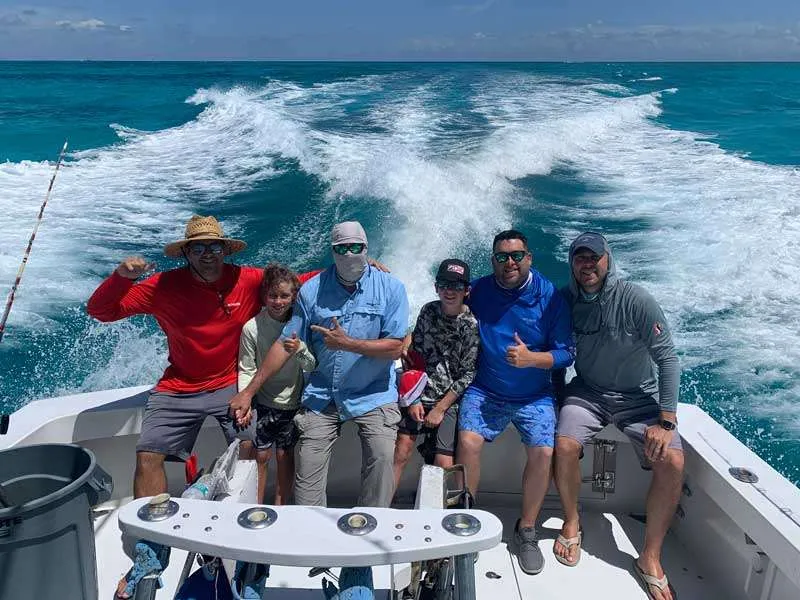
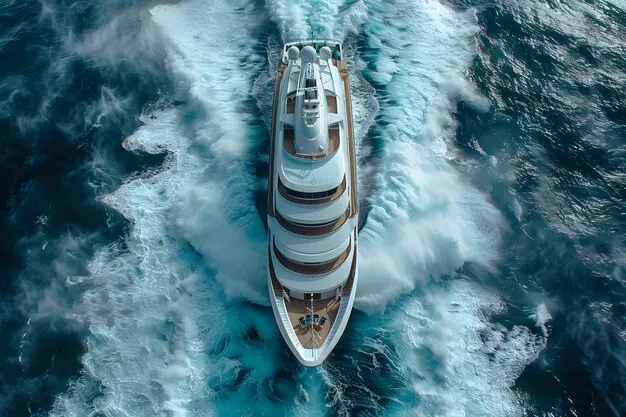
That era has not ended so much as it has been joined by another. Across America's coasts, a parallel economy has emerged: the luxury sportfishing charter, where a week pursuing blue marlin or giant bluefin tuna is provisioned, crewed, and choreographed with the same rigor as a five-star resort. And the affluent anglers who once split their discretionary budgets between Aspen and the Amalfi Coast are increasingly writing checks for the chance at a fish they will remember for the rest of their lives.
The Numbers Behind the Bite
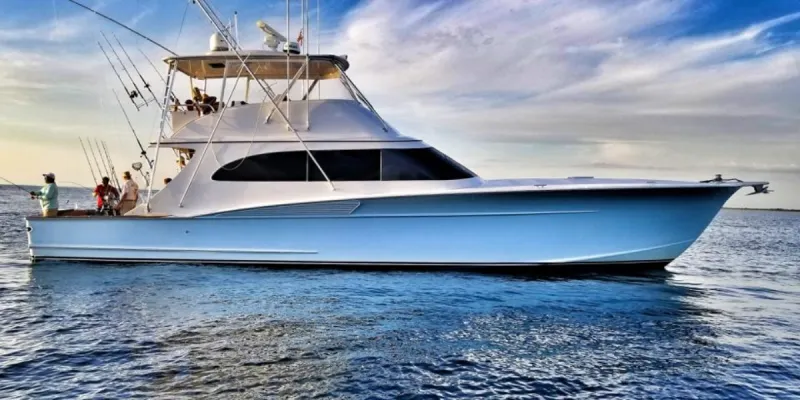
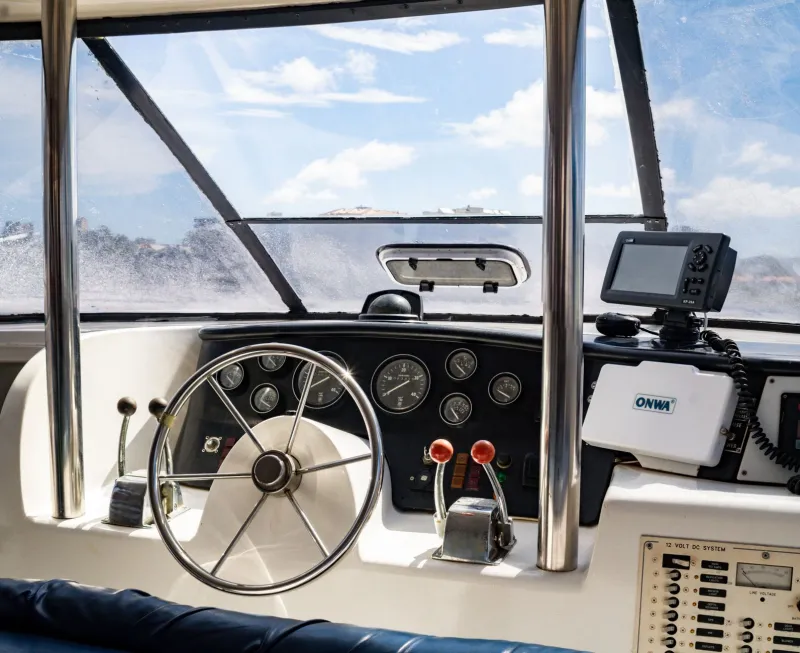
The growth is not anecdotal. Charter operators from Cape Cod to Cabo San Lucas report booking calendars filling further in advance each year, with rates for purpose-built sportfish yachts — the 60-to-80-foot converts and custom Carolina hulls with mezzanine cockpits and air-conditioned helm pods — climbing steadily since the pandemic accelerated demand for private, small-group travel.
What distinguishes this market from ordinary fishing tourism is the density of investment per trip. A serious offshore expedition now involves custom rods matched to the angler's hands, tackle rooms stocked with lures selected for the specific water column and bait profile of the target grounds, and, on the most elaborate trips, a separate chase boat carrying extra bait, spare gear, and a photographer.
The fish, in other words, are the destination. Everything else is infrastructure.
The Captain as Head of Strategy
Every elite expedition begins with a captain, and in this world the best ones are treated less like hired hands and more like fund managers of the sea. Their knowledge is granular: which temperature breaks are holding bait off Montauk in late June, where the striped marlin push sardina balls against the beach near Cabo in November, how the Gulf Stream's western edge will set up off Hatteras after a particular stretch of northeast wind.
The finest captains are also ruthless realists. They will tell a client when a window is wrong, when the moon is off, when the run to the grounds is not worth the fuel. That candor — the willingness to burn a day on the dock rather than troll empty water — is precisely what affluent anglers are paying for. It is the maritime equivalent of a private banker who says no.
From Galley to Gunwale: The Amenities Arms Race
Step aboard a top-tier sportfish yacht today and the distinction between fishing boat and floating hotel blurs quickly. Guests find staterooms with en-suite heads, chefs who plate seared yellowfin loin with a citrus glaze hours after the fish came over the rail, and lounges with satellite connectivity that lets an executive close a deal between bites.
Yet the most sophisticated operators insist the amenities serve the fishing rather than compete with it. The chef plans meals around fight schedules. The deck crew rotates so that no angler is ever unattended during a long stand-up battle with a big-eye tuna. The chase boat, where it appears, exists so the mothership can stay on the bite while ice and bait resupply happen out of sight.
This is the defining logic of the segment: luxury not as decoration, but as the removal of every friction between the guest and the moment a rod doubles over.
Why the Affluent Are Buying In
Several currents converge here. Wealthy Americans have developed a durable preference for private, controlled environments over crowded resorts. Multi-generational families are seeking shared adventures rather than parallel vacations. And a growing cohort of successful professionals — many of them self-made in finance, technology, and real estate — view a week on a tournament-grade sportfisher as both a genuine athletic pursuit and a rare setting for uninterrupted time with friends and children.
There is also the trophy itself. Not the fish mounted on the wall, though that happens, but the story. A grander blue marlin, a swordfish hauled from a thousand feet of Gulf water, a day when the bites never stopped — these are experiences that cannot be purchased casually, and their scarcity is the point.
The Grounds That Define the Game
The geography of American luxury sportfishing is broader than most newcomers realize. Cape Cod has become the epicenter of the giant bluefin fishery, where anglers battle fish exceeding 500 pounds within sight of a coastline that also happens to offer some of the finest summer cruising in the world. Off Hatteras, the meeting of Gulf Stream and continental shelf produces a pelagic buffet — marlin, wahoo, mahi — accessible in a half-day run.
Florida's Palm Beach coast remains the sailfish capital, particularly during the winter mullet run. In the Gulf, Venice, Louisiana delivers yellowfin tuna with a regularity that borders on the unfair. And at Cabo, where the Pacific meets the Sea of Cortez, the density of billfish is such that a slow day is the exception that proves the rule.
Each of these grounds has developed its own culture, its own roster of legendary captains, its own calendar. The sophisticated charterer treats them not as interchangeable destinations but as distinct disciplines — the way a mountaineer distinguishes the Alps from the Karakoram.
A Market Still Maturing
For all its growth, the top end of American sportfishing remains a craft industry. The best boats book by reputation and referral; the best captains are booked years out. That scarcity, ironically, is what preserves the quality. There is no scale to dilute, no franchise model to flatten the experience.
For the traveler considering a first serious expedition, the advice from those inside the trade is consistent: choose the captain before the boat, the boat before the destination, and be honest about your ambitions. The fish are wild, the ocean is indifferent, and the weather owes nobody anything. What a great charter sells is not a guaranteed catch but a guarantee that everything within human control — the vessel, the crew, the tackle, the provisioning — will be flawless.
That, as much as any marlin, is what the billion-dollar bite is really selling.