Reading the Sky Before the Chart: How the Finest Charter Captains Are Reviving the Lost Art of Celestial Navigation
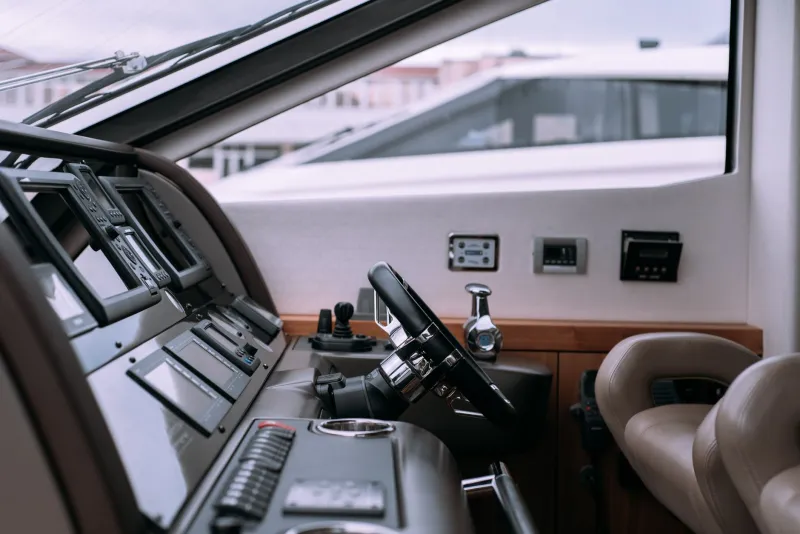
There is a particular stillness that settles over the ocean in the hour before dawn. The horizon has not yet committed to light or darkness. The instruments on the helm console glow their familiar, indifferent green. And then a captain reaches not for the touchscreen, but for a brass sextant — worn smooth at the grip, calibrated by hand — and tilts it toward a sky still thick with stars.
This is not a performance. It is a reclamation.
Across the American charter industry, a quiet but consequential shift is taking place among the most respected captains at sea. Quietly, deliberately, and with a conviction that speaks to something deeper than professional curiosity, a number of elite maritime professionals are reintegrating celestial navigation into their practice. Not as a backup system. Not as a parlor trick for curious guests. But as a living discipline — one that is simultaneously reshaping how they command their vessels and what they offer the travelers who sail with them.
The Digital Saturation Problem No One Talks About
Luxury travel, by its very nature, promises escape. Yet for many affluent American travelers, the modern charter experience has inadvertently replicated the very environment they sought to leave behind. Satellite connectivity, real-time weather dashboards, automated routing systems — these are extraordinary tools, and their value to safety and efficiency is beyond dispute. But they carry a cost that is rarely acknowledged: they keep both captain and guest tethered to the logic of the digital world, even when surrounded by open ocean.
The captains who have begun to step back from this dependency describe a similar realization. The instruments, for all their precision, create a mediated experience of the sea. One is navigating about the ocean rather than through it. The water becomes backdrop rather than text.
Celestial navigation demands something categorically different. It requires that the navigator read the sky with the same intimacy that a scholar reads a manuscript — attending to the declination of a star, the arc of the sun, the subtle geometry of the moon's position relative to the horizon. It is a conversation with the cosmos conducted in mathematics, patience, and profound attention.
For captains who have spent careers at sea, rediscovering this practice is described less as learning and more as remembering.
What the Sextant Actually Teaches
The sextant is, at its core, an instrument for measuring angles. It determines the angular distance between a celestial body and the visible horizon, allowing a navigator to calculate position with remarkable accuracy when combined with precise timekeeping and an almanac of stellar data. The technique dates to the eighteenth century and was the dominant method of oceanic navigation for over two hundred years.
But captains who have returned to its practice will tell you that the sextant teaches something the GPS cannot: humility before the vastness of the natural world, and confidence earned through genuine skill rather than delegated to software.
The process is slow. It is deliberate. It requires three celestial sights to establish a reliable fix — each one taken at a specific moment, recorded with care, and then worked through a series of calculations that connect the observer to the geometry of the solar system itself. There is no shortcut. There is no refresh button.
For the captain, this slowness is not a limitation. It is the point.
The Guest Experience That Cannot Be Manufactured
For the travelers aboard a Prosline Charters vessel, the revival of celestial navigation offers something that no amenity list could adequately describe. When a captain steps onto the foredeck at civil twilight, sextant in hand, and invites guests to witness — or participate in — the ancient ritual of taking a star sight, something shifts in the atmosphere of the voyage.
Time expands. Conversation deepens. The ocean, which may have felt like a scenic backdrop, suddenly reasserts itself as the primary subject.
Guests who have participated in celestial navigation sessions aboard luxury charters consistently report a quality of presence that eludes them in ordinary life. There is no notification competing for attention when you are watching a captain align the image of Polaris with the horizon through a brass instrument and then consult a celestial almanac that reads like a private correspondence with the stars. The experience is, by its nature, absorbing.
For the affluent professional whose attention is perpetually fractured across devices, obligations, and time zones, this absorption is not merely pleasant. It is restorative in a way that no spa treatment or curated itinerary can replicate.
Heritage as the Highest Form of Luxury
There is a broader cultural current running beneath this trend, one that the most perceptive luxury brands have already identified. Among high-net-worth American travelers, the appetite for authenticity has grown in direct proportion to the proliferation of manufactured experience. What commands genuine reverence is no longer exclusivity alone, but mastery — the visible evidence of a human being in full command of a difficult and irreplaceable skill.
A captain who navigates by the stars is not offering a service. He or she is embodying a lineage. The techniques being employed are the same ones that carried explorers across uncharted Atlantic waters, that guided merchant vessels through the Pacific before the age of radio, that connected generations of seafarers to one another across centuries of open ocean.
To witness this aboard a private charter — framed by the silence of deep water, under a sky undimmed by city light — is to participate in something that money alone cannot purchase. It must be sought, and it must be understood to be fully received.
Choosing a Voyage That Offers More Than Arrival
For travelers considering a charter experience through Prosline Charters, the rise of celestial navigation as a featured element of the journey represents an opportunity to redefine what a voyage can mean. The destination remains important. The vessel, the cuisine, the crew — all of these continue to matter enormously. But the character of the passage itself, the texture of the hours spent between departure and arrival, is increasingly where the most meaningful luxury resides.
The captains who have embraced this practice are not rejecting modernity. Their safety systems remain fully operational, their meteorological awareness is as sophisticated as ever, and their professional standards are without compromise. What they are offering, in addition to all of that, is a different quality of attention — a willingness to engage with the sea on terms older than the industry that now surrounds it.
For the traveler willing to meet that offering with equal presence, the result is a journey that does not end when the vessel reaches port. It continues, quietly, in the memory of a sky full of stars and the sudden, startling understanding that human beings once crossed entire oceans with nothing more than their eyes, their instruments, and an unwavering trust in the geometry of the heavens.
That is not nostalgia. That is the deepest luxury the water has to offer.