Fluent in the Sea: The Unwritten Codes of Maritime Etiquette Every Cultured Charter Guest Should Know
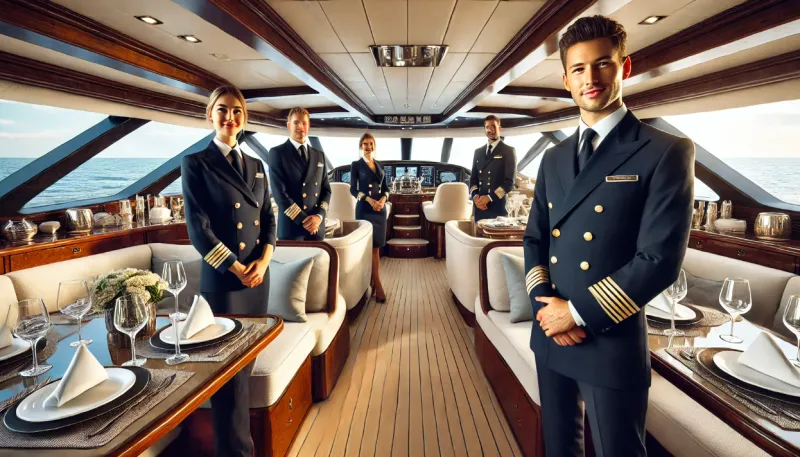
Photo: luxury yacht captain crew formal deck etiquette elegant guests, via yachts28.com
There is a particular kind of confidence that announces itself not through words, but through comportment. Aboard a private charter yacht, that confidence is shaped by something most first-time guests never consider before departure: an understanding of maritime tradition. The sea has its own civilization, complete with customs, hierarchies, and rituals refined over centuries of seafaring culture. For America's most discerning travelers, learning this language before setting sail is no longer optional — it is the mark of true sophistication.
The Vessel as a World Unto Itself
A luxury charter yacht is not a floating hotel, though it may rival one in comfort and appointment. It is, at its core, a working vessel — and that distinction carries profound implications for how guests conduct themselves aboard. The moment you step over the transom, you enter a world governed by maritime law, the captain's authority, and centuries of seafaring protocol.
Veteran captains who serve high-net-worth clientele consistently note that the guests who derive the most from their voyages are those who arrive with at least a foundational appreciation of how a vessel operates. "There is a rhythm to life on the water," one seasoned captain with more than two decades of luxury charter experience explained. "Guests who understand that rhythm — who move with it rather than against it — find that everything flows more naturally. The crew performs better, the experience deepens, and the journey becomes something they genuinely cannot replicate anywhere else."
Addressing the Captain: Rank, Respect, and the Right Register
Perhaps no single piece of maritime etiquette is more universally misunderstood than the proper way to address and interact with the vessel's captain. In luxury charter culture, the captain holds supreme authority over all matters of navigation and safety. This is not a formality — it is a legal and practical reality.
The appropriate form of address is simply "Captain," followed by the individual's surname if you know it. Addressing the captain by first name without explicit invitation to do so is considered a breach of protocol, regardless of the informality the setting might otherwise suggest. More significantly, no guest — however accomplished or prominent in their professional life — should issue navigational instructions or challenge the captain's decisions regarding the vessel's operation.
This does not mean the relationship is cold or transactional. Quite the contrary. The finest charter captains cultivate warm, attentive rapport with their guests. The distinction lies in understanding which conversations belong to the realm of preference — where your input is not only welcomed but essential — and which belong to the realm of seamanship, where deference is both appropriate and wise.
The Hierarchy Below Decks
Beyond the captain, a luxury charter yacht operates according to a clear chain of command that sophisticated guests learn to recognize and respect. The first mate or first officer serves as the captain's direct deputy and is typically responsible for overseeing deck operations and crew. The chief steward or chief stewardess manages all interior service, from cabin presentation to dining. In larger vessels, additional crew members — deckhands, engineers, chefs, and junior stewards — each occupy a defined role within this hierarchy.
Etiquette consultants who specialize in high-net-worth maritime clientele often advise guests to channel all significant requests through the chief steward rather than approaching individual crew members directly. This practice is not merely about formality; it ensures that requests are fulfilled efficiently and that crew members are not placed in the uncomfortable position of receiving conflicting instructions. It also reflects a genuine understanding of how a well-run vessel operates.
Gratuity, too, follows a structured tradition. Industry convention among American charter guests typically places the appropriate tip between fifteen and twenty percent of the base charter fee, distributed at the end of the voyage. The captain generally receives the largest individual share, with the remainder distributed among crew according to the chief steward's discretion. Presenting the gratuity in a sealed envelope to the captain or chief steward — never in cash handed informally to individual crew — is the accepted practice aboard luxury vessels.
Boarding, Departing, and Moving Through the Vessel
The physical act of boarding a yacht carries its own set of conventions. Guests should always ask permission before stepping aboard — the phrase "Permission to come aboard?" is not an anachronism; it is a genuine expression of respect for the vessel and her crew. Remove shoes before crossing the threshold onto teak decking, unless crew members specifically indicate otherwise. Deck surfaces are meticulously maintained, and footwear — particularly hard-soled shoes — can cause damage that is both costly and difficult to repair.
Movement through the vessel should be deliberate and unhurried. Narrow companionways and passages demand awareness of others. The maritime convention of keeping to the starboard (right) side when moving through shared spaces helps prevent collisions in tight quarters. When ascending or descending ladders and companionways, always maintain three points of contact — a rule born not of excessive caution, but of the sea's fundamental unpredictability.
Dress, Dining, and the Rhythms of Shipboard Life
The luxury charter experience is one of elegant informality — a calibration that can be difficult to strike without some prior consideration. Dress codes aboard private charters are typically relaxed during daylight hours, with resort wear, quality swimwear, and breathable linens perfectly appropriate. As the sun descends, however, the atmosphere aboard most luxury vessels shifts perceptibly. Evening gatherings — particularly formal dinners prepared by the vessel's private chef — warrant a standard of dress commensurate with the occasion.
Dining aboard a charter yacht follows rhythms set by the chef and the vessel's itinerary. Guests who communicate dietary preferences and restrictions in advance — ideally during the pre-departure provisioning consultation — allow the culinary team to perform at the highest level. Last-minute requests, while accommodated graciously by experienced crews, place unnecessary strain on galley operations and diminish the overall dining experience.
Perhaps most importantly, the finest charter guests understand that shipboard life operates on the sea's schedule, not theirs. Sunrise anchorages, weather-driven itinerary adjustments, and the occasional mechanical consideration are not inconveniences — they are the authentic texture of maritime travel. Embracing this reality with grace is itself a form of sophistication.
Why This Knowledge Transforms the Voyage
The most accomplished travelers who sail with Prosline Charters consistently report the same discovery: that arriving with even a modest fluency in maritime tradition fundamentally changes the quality of their experience. The crew, sensing that their guests understand and honor the world they inhabit, responds with a level of attentiveness and warmth that transcends professional obligation. The vessel, managed with mutual respect between guests and crew, operates more harmoniously. And the traveler, freed from the subtle friction of uncertainty, moves through the voyage with the ease and confidence that defines genuine luxury.
The ocean has always rewarded those who approach it with knowledge and humility. The same is true of the culture that has grown up around it. Before you cast off from your next departure point — whether it be the Florida Keys, the coast of Maine, or the waters of the Pacific Northwest — consider investing a few hours in the silent language of the sea. You may find that it speaks to something in you that no resort, no hotel suite, and no terrestrial destination ever quite reaches.