The Eloquence of Absence: Why the Greatest Charter Captains Know When to Vanish
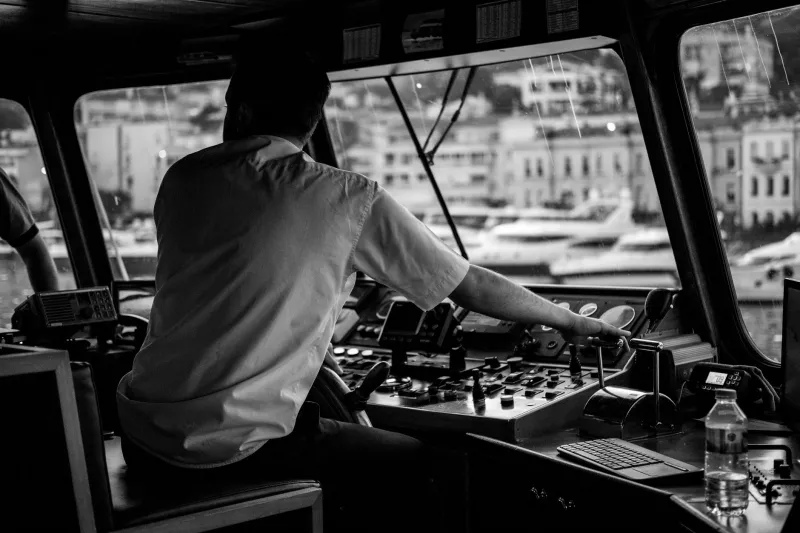
There is a particular kind of mastery that announces itself through restraint. In music, it is the rest between notes. In architecture, it is the deliberate emptiness of a room. And aboard a luxury charter yacht, it is the captain who understands—with precision and grace—when to step away.
This is not a passive skill. It is, in fact, among the most demanding competencies a charter captain can develop. Any professional can navigate a vessel through difficult waters or manage a complex provisioning itinerary. Far fewer can read a guest's interior weather with the same accuracy they read the sky.
The Psychology of Presence
Luxury travelers—the kind who charter private yachts rather than book resort suites—arrive aboard with needs they rarely articulate aloud. A chief executive who has spent the week fielding shareholder calls does not request solitude. She simply sits at the stern with a glass of wine and an unfocused gaze, and in that posture communicates everything.
The captain who interrupts that moment to offer a weather update, however well-intentioned, has committed a subtle but significant breach. He has prioritized his own role—his visibility, his usefulness—over the guest's actual experience. The finest captains in this industry have learned, often through years of careful observation, that the most luxurious gift they can extend is the gift of uninterrupted space.
This is not indifference. It is the opposite. It requires a captain to be acutely present in order to know precisely when to become invisible.
Reading the Room from the Bridge
Experienced charter captains describe a kind of peripheral attentiveness that becomes second nature over time. They are monitoring the vessel, yes—but they are simultaneously reading the body language of every guest aboard. The couple who have grown quiet after lunch. The group of friends who have shifted from laughter to contemplative gazing at the horizon. The solo traveler who has moved from the main salon to the bow and positioned his chair to face away from the crew.
Each of these signals is legible to the captain who has cultivated genuine emotional intelligence. And each calls for a different response—or more precisely, a different calibration of non-response.
Captains who work with high-net-worth American clientele often note that this demographic is particularly sensitive to what might be called managed spontaneity. These guests want their needs anticipated, not asked about. They want logistics to dissolve into the background so completely that the voyage feels effortless, as though the sea itself is conspiring to serve them.
That seamlessness requires the captain to be, in a very real sense, a skilled psychologist as much as a skilled mariner.
The Architecture of Discretion
Consider a scenario familiar to seasoned charter professionals: a family of four books a week-long passage along the coast of New England. The first two days are lively—deck games, group dinners, excursions ashore. By the third afternoon, however, the mood has shifted. The parents have settled into their separate rhythms. The teenagers have retreated to their cabins with books.
A less attuned captain might interpret this quiet as dissatisfaction and attempt to inject energy—suggesting an unplanned stop at a nearby harbor, proposing an evening activity. A captain of genuine sophistication recognizes something else entirely: the family has found its natural pace. The voyage has become what it was always meant to be—not a performance of leisure, but leisure itself.
In that moment, the captain's highest service is to ensure the vessel continues moving beautifully, that meals appear as if conjured, and that no crew member disturbs the atmosphere that has organically emerged. He becomes, in effect, the invisible architecture of a perfect afternoon.
When Silence Is the Message
There are also moments aboard a luxury charter when silence carries specific emotional weight—and the captain must be equipped to hold it with the guest rather than fill it.
A guest who has recently lost a spouse, or who is navigating a significant professional transition, may choose a solo voyage precisely because the ocean offers a scale of quiet that no other environment can match. The horizon does not demand conversation. The water does not require explanation. And the captain who understands this—who can be present enough to ensure safety and comfort while remaining genuinely unobtrusive—provides something that no hotel concierge or resort staff member can replicate.
This is a distinction that affluent American travelers are increasingly recognizing. The appeal of private charter is not simply the exclusivity of the vessel or the beauty of the destination. It is the radical personalization of the atmosphere itself. A charter yacht can become, under the stewardship of a perceptive captain, whatever its guests most need it to be.
The Discipline Behind the Quiet
It would be a mistake to romanticize this skill without acknowledging its difficulty. Knowing when not to speak is, paradoxically, an active discipline. It requires a captain to suppress the professional instinct to demonstrate competence—to offer information, to suggest options, to be visibly useful. It requires a kind of confident self-erasure that only comes with experience and, frankly, with a deep understanding of what luxury actually means.
Luxury, at its most refined, is not abundance. It is precision. It is the right thing, delivered at the right moment, in exactly the right measure. And sometimes the right thing is nothing at all—a smoothly running vessel, a crew that moves like shadows, and a captain who has made himself as unobtrusive as the tide.
The captains who have mastered this understand something essential: their guests did not charter a yacht to be hosted. They chartered it to be free. Every unnecessary word, every well-meaning interruption, every offered suggestion that was not requested is, in some small way, a constraint on that freedom.
What This Means for the Discerning Charterer
For those considering a private charter voyage, this dimension of captain selection deserves serious attention. Technical credentials matter, of course—licensing, experience, safety record. But equally important is the question of temperament. Does this captain demonstrate the emotional intelligence to serve not only your itinerary but your interior life?
At Prosline Charters, this is a criterion we consider fundamental. The captains with whom we partner are not simply skilled navigators. They are students of human nature—professionals who have invested years in understanding that the highest form of service is often the one that leaves no visible trace.
The sea has always rewarded those who listen more than they speak. The finest charter captains have simply learned to apply that lesson to everything that happens aboard their vessels—including, and perhaps especially, themselves.