The Unretiring Sea: Why the Ocean's Greatest Captains Never Stop Sailing, and What That Tells Us About Meaning
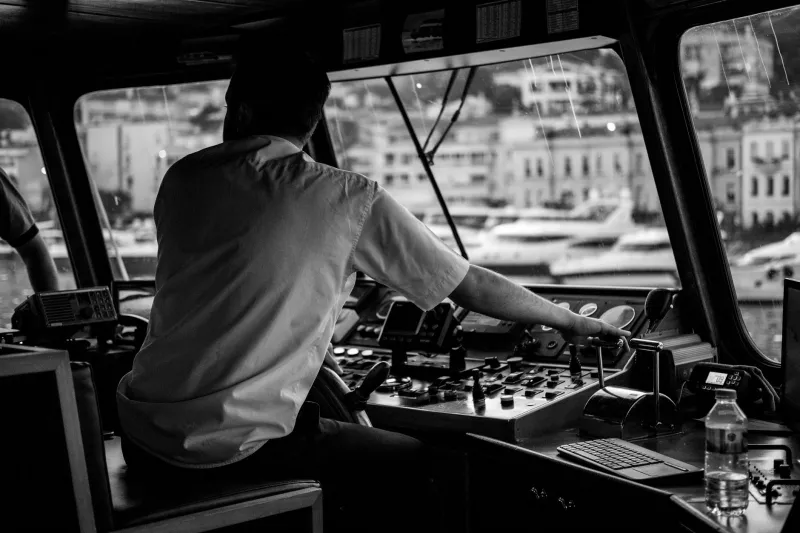
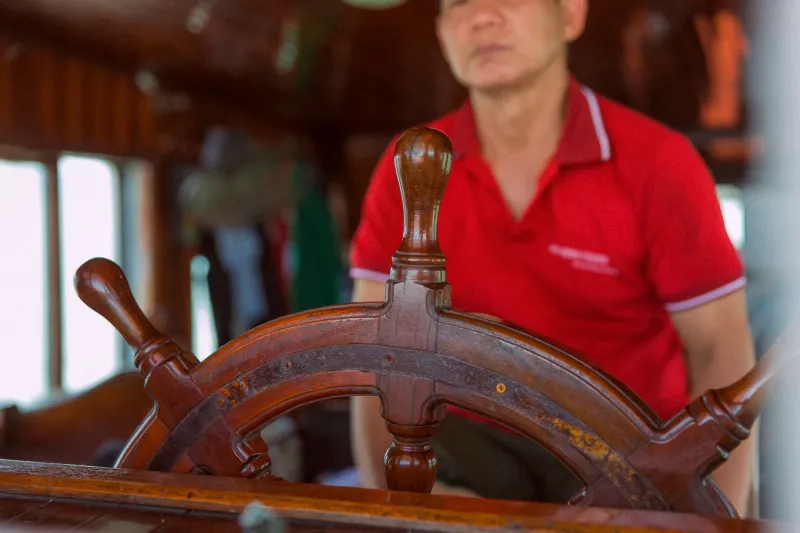
There is a particular kind of man or woman you will encounter aboard the finest charter vessels operating along the American coastline — from the Florida Keys to the Pacific Northwest, from the Chesapeake Bay to the blue-water reaches beyond Montauk. They carry their years with quiet authority. Their hands bear the cartography of decades at sea: sun-darkened, deliberate, unhurried. Ask them whether they have considered stepping back, and they will regard you with something between amusement and genuine puzzlement. The question, to them, makes no more sense than asking the tide whether it has considered resting.
These are the captains who do not retire. And what that choice reveals about the nature of purpose — about what it means to live a life organized around genuine mastery — is worth examining carefully, particularly for those among their clientele who are themselves approaching the fraught threshold of professional disengagement.
The Architecture of Enduring Vocation
Conventional wisdom in American professional culture treats retirement as a destination: a reward earned through decades of productive labor, a release from obligation, an invitation to leisure. It is a framework that works reasonably well for those whose careers were primarily transactional — work exchanged for compensation, effort measured against quarterly targets. But for the master mariner, this model fails entirely.
The charter captain's relationship with the sea is not transactional. It is constitutive. The ocean does not merely provide a livelihood; it provides a continuous and demanding arena in which identity, competence, and purpose are renewed daily. Every departure from the dock is a fresh negotiation with an environment that does not permit complacency. Every successful voyage — whether a blue-water fishing expedition two hundred miles offshore or a week-long coastal passage through the Intracoastal Waterway — represents a meaningful act of navigation, judgment, and care.
Remove that arena, and something essential collapses. The captains themselves will rarely articulate this in such terms. They are not, as a rule, given to philosophical elaboration. But press them gently, and the same themes emerge: the sea keeps the mind sharp; there is always something new to learn; they would not know what to do with themselves on land. These are not the rationalizations of men and women who simply enjoy their work. They are descriptions of a life organized around irreplaceable purpose.
What Affluent Professionals Can Learn from the Wheelhouse
The parallel with the captains' most discerning guests is not incidental. Among the clientele who charter private yachts through services like Prosline Charters, a significant proportion are themselves navigating — or dreading — the transition away from the careers that have defined them. The retired surgeon. The recently stepped-down CEO. The attorney who has handed her practice to a younger partner. These are individuals who built their identities through sustained mastery in demanding fields, and who now find that the conventional leisure culture of retirement — golf, grandchildren, winter homes in Palm Beach — offers insufficient scaffolding for a life that once ran at full cognitive and emotional capacity.
Spending extended time at sea with a seasoned captain is, for many of these guests, a quietly revelatory experience. They observe, perhaps without fully naming it, someone who has solved the problem they are struggling with. The captain does not face the existential deflation of disengagement because disengagement is never available to him. The sea demands too much, and offers too much in return, for any thought of withdrawal to gain purchase.
The Spiritual Dimension of Maritime Mastery
There is a dimension to this that transcends psychology and enters the territory of the spiritual — a word that need not carry religious freight to carry genuine weight. The ocean is one of the few environments remaining in modern American life that is genuinely, irreducibly beyond human control. It humbles without malice. It rewards preparation and punishes arrogance with an impartiality that no human institution can match.
For the captain who has spent thirty or forty years in this relationship, the sea becomes something closer to a dialogue partner than a workplace. The morning sky read before departure, the subtle shift in swell that signals a weather change three hours before any instrument registers it, the instinctive adjustment of course that keeps a vessel and her guests comfortable through a following sea — these are not technical procedures. They are the accumulated vocabulary of a conversation conducted over a lifetime.
That conversation does not end at sixty-five, or seventy, or seventy-five. It deepens. The captain who has logged forty thousand nautical miles reads the water with an intelligence that no younger mariner can replicate, because the intelligence is not merely cognitive — it is somatic, intuitive, and layered with experience that only time can deposit. Retirement would not simply end a career. It would silence a dialogue that has become, in the most genuine sense, the organizing principle of a life.
Purpose as Navigation
What the finest charter captains understand — and what their most thoughtful guests eventually come to appreciate — is that purpose is not a destination. It is a mode of transit. It is the condition of being genuinely oriented: toward something that demands your best capacities, that offers meaningful resistance, and that cannot be mastered once and then set aside.
The sea provides this in perpetuity. No two passages are identical. No season repeats precisely. The captain who has fished the Gulf Stream for three decades will tell you, without irony, that the Gulf Stream surprised him last April in ways he had not anticipated. That surprise is not a failure of expertise. It is the dividend of an ongoing relationship with an environment that remains, in all its grandeur, fundamentally alive.
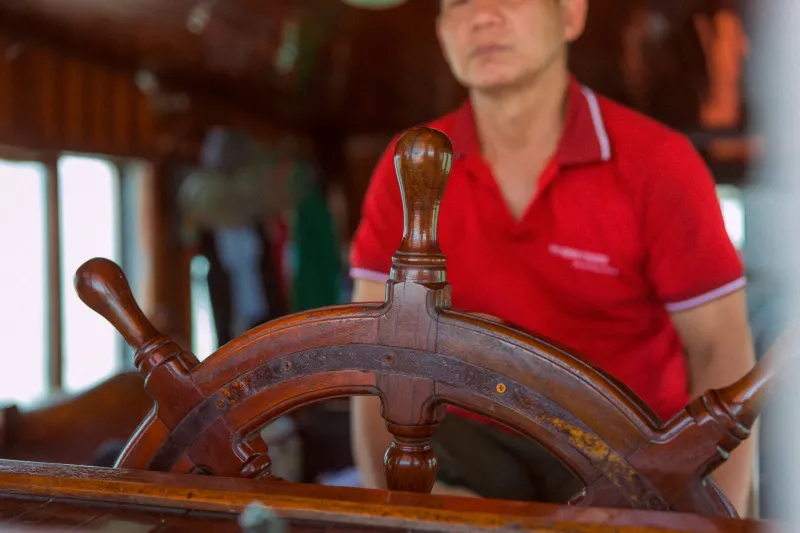
For guests aboard a Prosline Charters vessel, the opportunity to observe this relationship firsthand — to spend days in the company of someone who has genuinely solved the question of lifelong purpose — is among the more quietly instructive experiences the sea has to offer. The fishing is extraordinary. The anchorages are magnificent. The cuisine and accommodation meet every expectation of luxury. But the deeper gift, available to those who pay attention, is this: the sight of a person fully and permanently at home in their vocation, standing at the helm as the sun rises over the Atlantic, with no thought of any other life.
That image has a way of lingering long after the voyage concludes. It tends to prompt questions that no resort, retreat, or retirement planner has yet learned to answer.
An Invitation Worth Considering
If you are among those who have built a life around mastery and are now contemplating what comes next, consider spending time at sea — not merely as a vacation, but as an inquiry. Book a week aboard a crewed charter. Watch the captain work. Ask him how long he has been doing this. Listen to the answer carefully.
The ocean has been posing the question of purpose for longer than any civilization has been asking it. The captains who have stayed are those who learned, early and permanently, that the question is also the answer.