The Cartography of Quiet: Crafting a Private Charter Voyage Engineered for Deliberate Solitude
There is a particular kind of exhaustion that no spa can address. It arrives not in the muscles but somewhere closer to the center of a person—the accumulated weight of consequence, of visibility, of being perpetually required. The professionals, executives, and creative minds who know this fatigue intimately have largely abandoned the notion that a structured wellness retreat will resolve it. What they have discovered, with growing conviction, is that the private charter voyage—designed with the specific intention of vanishing—offers a remedy of an altogether different order.
The key word is designed. Solitude, when left to chance, becomes merely loneliness. When it is engineered with the same deliberateness one brings to a business strategy or an architectural commission, it becomes something transformative. The question is not simply where to sail, but how the entirety of a voyage—its route, its timing, its vessel, its crew dynamic—can be assembled to produce the specific quality of alone time that permits genuine creative and psychological renewal.
The Psychology of Route Selection
Not all waters produce the same interior weather. This is not mysticism; it is geography acting upon the nervous system in ways that are both measurable and deeply personal.
The Florida Keys, for instance, offer a particular calibration of remoteness. The backcountry flats north of Key West—shallow, silent, shimmering with a light that seems to arrive from below rather than above—create an almost enforced stillness. There are no landmarks demanding attention, no horizon cluttered with development. The mind, deprived of external stimulation, eventually turns inward with a quality of focus that is difficult to manufacture elsewhere. For the traveler whose solitude requires expansiveness rather than enclosure, the offshore passages of the Gulf Stream corridor—running north along the Atlantic seaboard—provide a different register entirely: the profound, rolling emptiness of deep blue water with nothing visible in any direction.
The Pacific Northwest presents yet another temperament. The Inside Passage, threading through the coastal wilderness of British Columbia and Southeast Alaska, is a geography of cathedral silence. Fog banks that arrive without announcement, shorelines of old-growth timber descending directly to the water's edge, anchorages where the only sound is the occasional exhale of a humpback whale—this is a route that does not merely quiet the mind but seems to dissolve the very categories by which one normally organizes thought. For the writer, the strategist, or the entrepreneur who needs not just rest but genuine cognitive reorganization, few passages on the American charter circuit rival it.
The experienced charter consultant at Prosline Charters will ask a client seeking solitude not simply where they wish to go, but what kind of silence they require. These are meaningfully different questions.
Seasonal Intelligence and the Art of Choosing Emptiness
Route selection is only one variable. The season in which a voyage is undertaken determines, in large measure, whether a destination will deliver the isolation a guest genuinely needs.
The shoulder seasons—late spring and early autumn—are frequently the most valuable periods for the traveler prioritizing solitude over social spectacle. In the Bahamas, for example, the period between late April and early June offers water temperatures that remain comfortable for swimming and diving while the summer crowds have not yet materialized. Anchorages that would be animated with neighboring vessels in July become entirely private. The quality of light in these months—lower, warmer, more oblique—has a particular effect on the psychology of the person aboard: time seems to move differently, and the urgency that follows most high-achieving individuals wherever they travel begins, incrementally, to release its grip.
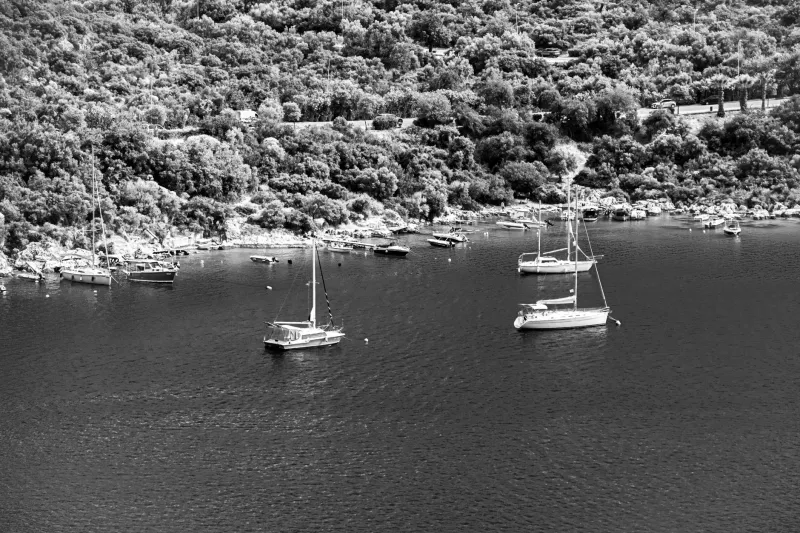
In New England, the weeks immediately following Labor Day represent a similar window. The cruising grounds of Maine's Penobscot Bay—among the most spectacular sailing waters on the Eastern Seaboard—empty with remarkable speed after the summer season concludes. What remains is a coastline of granite and spruce, lobster boats and working harbors, and an atmosphere of quiet industry that has nothing to perform for the visitor. For the person who needs their solitude to carry a sense of authenticity rather than manufactured tranquility, this is a profoundly satisfying environment.
Vessel Selection as a Statement of Intent
The vessel itself is not a neutral container. Its size, its layout, its character—these factors shape the interior experience of a voyage in ways that are easy to underestimate.
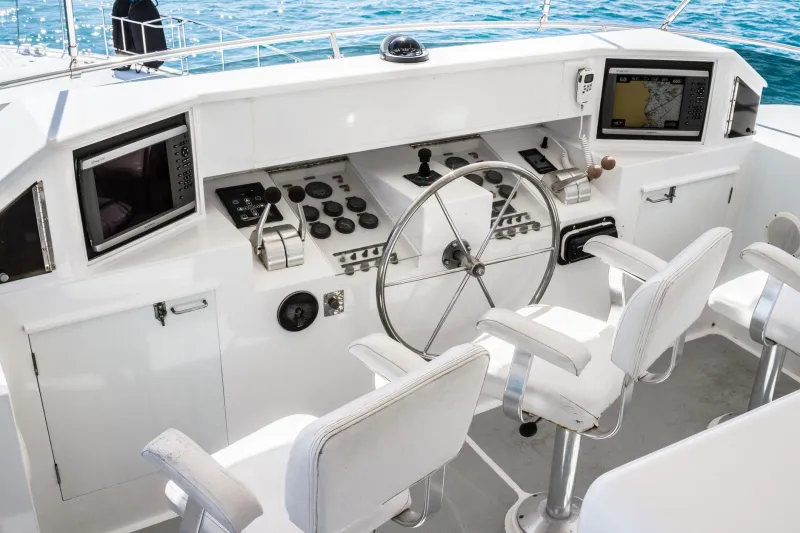
A large motor yacht, with its multiple staterooms and expansive social spaces, is fundamentally a vessel designed for gathering. Its architecture implicitly invites occupation of common areas, movement between decks, the choreography of group life. For the solo traveler or the couple seeking genuine withdrawal, it can feel like inhabiting a house that was built for a family that never arrived.
A sailing vessel of moderate size—a well-appointed 50- to 65-foot sloop or ketch—offers a different proposition. The act of sailing itself, even when managed entirely by the captain and crew, imposes a relationship with the environment that is participatory rather than passive. The traveler is aware of the wind, of the heel of the hull, of the passage of weather systems in ways that a motor yacht insulates against. This sensory engagement, paradoxically, facilitates a particular quality of internal quiet: the mind is occupied at a shallow level by the immediate physical experience of the passage, which frees the deeper registers of thought to work without interruption.
For those whose solitude is oriented toward creative work—writing, strategic thinking, the kind of problem-solving that requires sustained uninterrupted attention—a vessel with a dedicated private workspace is not a luxury but a functional necessity. The finest charter yachts now offer purpose-configured owner's suites with desk space, natural light, and acoustic separation from the working areas of the boat. These details matter enormously when the purpose of the voyage is not relaxation in the conventional sense but something more deliberately productive.
The Captain's Role in Honoring Absence
Perhaps the most underappreciated element of a solitude-oriented charter is the disposition of the crew—and above all, the captain.
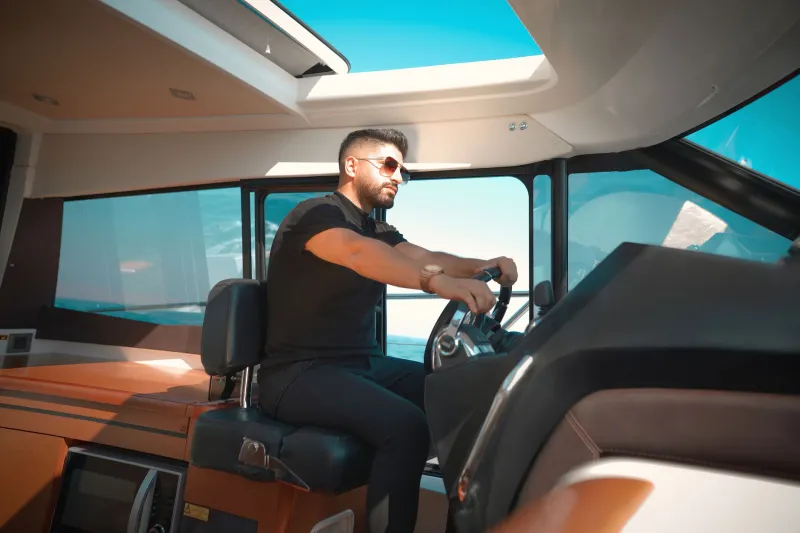
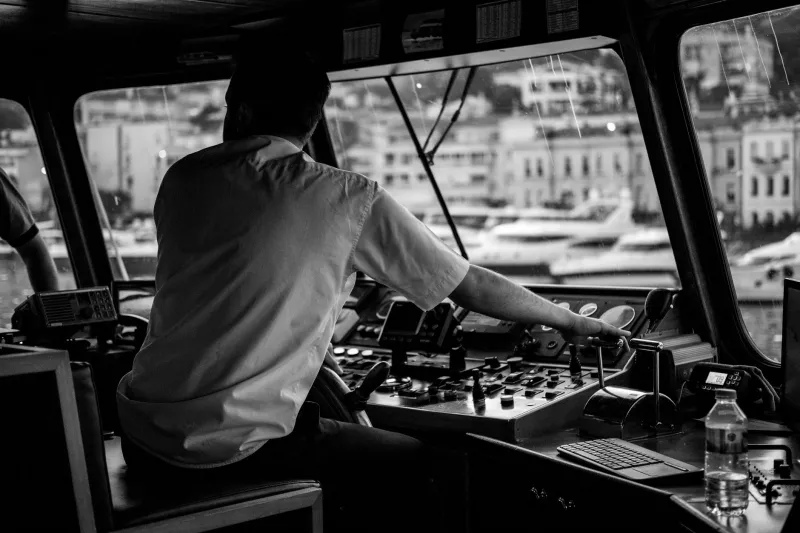
The finest charter captains understand that genuine service sometimes means becoming nearly invisible. This is a sophisticated professional skill, distinct from indifference and requiring, in fact, a heightened attentiveness. The captain who can read a guest's desire for uninterrupted hours on the foredeck, who can deliver meals without conversation, who can make decisions about anchorage and passage without requiring consultation—this individual is not merely executing logistics but actively curating the conditions for the guest's experience.
At Prosline Charters, the matching of captain to guest is treated with the same care as the matching of vessel to itinerary. For the traveler whose voyage is built around solitude, we seek captains who carry their professionalism lightly—who are present without being intrusive, responsive without being anticipatory in ways that feel like surveillance.
Designing the Itinerary Itself
The architecture of a solitude voyage benefits from a specific structural principle: the itinerary should be loose enough to honor the organic rhythms of the person aboard, but coherent enough to provide a sense of forward movement that prevents the emptiness from curdling into restlessness.
A sequence of longer passages—overnight or multi-day runs between destinations—interspersed with extended anchored periods in quiet coves or working harbors tends to produce the most satisfying rhythm. The passage provides motion and sensory engagement; the anchored period provides stillness and depth. The alternation between these two states mirrors something in the natural cycle of creative and contemplative work: the mind needs both movement and rest, both stimulation and silence, to do its best and most honest work.
This is, ultimately, what distinguishes a deliberately crafted solitude voyage from the accidental quiet of a conventional charter. It is not the absence of other people that matters most. It is the presence of conditions—geographic, temporal, nautical, human—that have been selected with enough intelligence and care to let a person, finally, hear themselves think.