The Thinking Person's Voyage: How Time at Sea Unlocks Philosophical Clarity That No Retreat Can Replicate
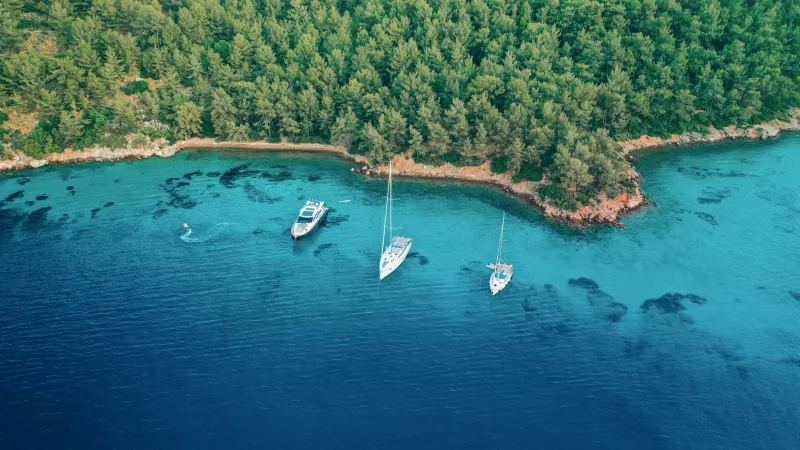
There is a particular kind of silence that exists forty nautical miles from shore. It is not the silence of a meditation room, carefully engineered with white walls and diffused lighting. It is not the curated quietude of a mountain retreat or the enforced stillness of a wellness weekend. It is something altogether more demanding — and, for those who surrender to it, something far more rewarding.
For a growing number of America's most accomplished professionals, this silence has become the most coveted destination on their itinerary. Not a port. Not a landmark. The silence itself.
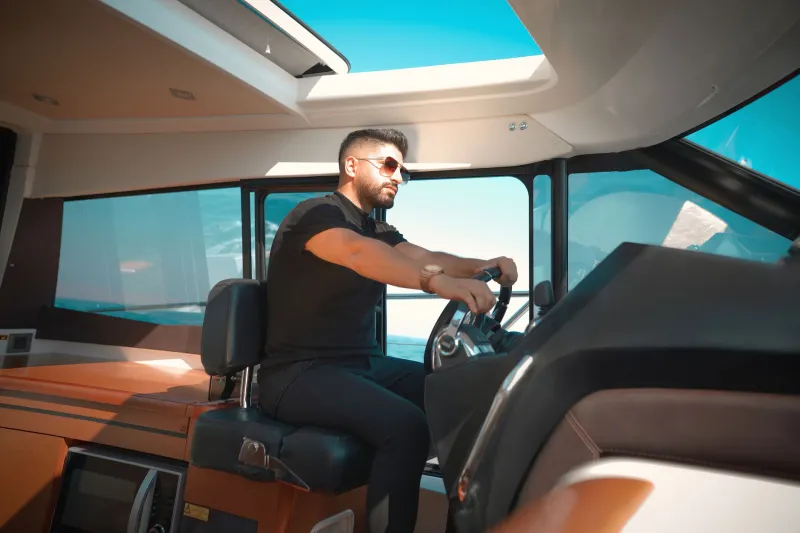
And standing at the center of that silence, more often than not, is the charter captain.
The Unlikely Philosopher at the Helm
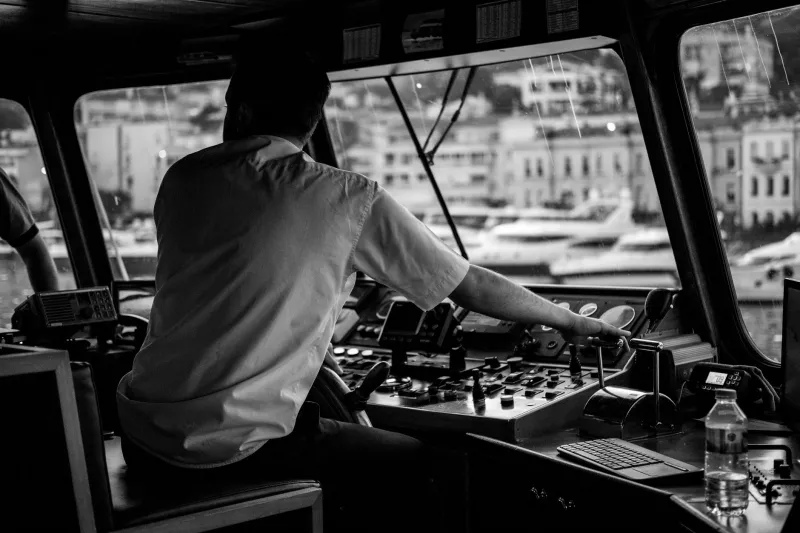
To understand why luxury charter voyages have become an unexpected crucible for existential reflection, one must first understand the nature of the captains who lead them. These are individuals who have spent years — sometimes decades — navigating not only the physical complexities of open water but the human complexities of their guests. They have hosted grieving widows and celebrating newlyweds, retiring executives and restless entrepreneurs. They have watched people arrive tightly wound and watched those same people, days later, exhale in ways that suggested something fundamental had shifted.
The finest captains develop, through sheer accumulated experience, a sensitivity to the rhythms of human psychology that rivals that of trained counselors. They know when to speak and when to hold their counsel. They understand that the ocean does much of the work on its own — and that their role is often simply to create the conditions in which that work can proceed uninterrupted.
This is a form of wisdom that does not appear on any maritime certification. It is earned through thousands of hours at sea in the company of people who, having left their professional identities on the dock, are suddenly confronted with themselves.
What Extended Time at Sea Actually Does to the Mind
The mechanism is not mystical, though the experience can feel that way. Extended charter voyages — those lasting five days or more — operate on a timeline that defies the compressed urgency of modern American life. There are no back-to-back meetings. There are no inboxes. There is the water, the weather, the vessel, and the gradual unwinding of a nervous system that has been running at unsustainable speeds.
Neurologically, this sustained removal from stimulation allows the prefrontal cortex — the region most associated with higher-order thinking, long-range planning, and genuine self-reflection — to recover from the chronic overload that characterizes executive life. What emerges, often to the surprise of guests who boarded the vessel expecting simply a luxurious escape, is a quality of thought they have not accessed in years.
Questions that were previously too large or too inconvenient to examine begin to surface. Questions about purpose, legacy, relationship, and direction. The ocean, indifferent to résumés and net worth, has a way of leveling the field and returning a person to the essential.
The Captain as Confidant: A Relationship Unlike Any Other
What distinguishes the charter experience from other forms of retreat is the presence of the captain as a consistent, grounding human presence throughout the journey. Unlike a therapist who sees a client for fifty minutes a week, or a wellness instructor encountered briefly between sessions, the charter captain inhabits the same vessel for the duration of the voyage. Meals are shared. Sunrises are witnessed together. Storms, when they arise, are navigated in proximity.
This sustained proximity, combined with the captain's professional discretion and the implicit understanding that what unfolds at sea remains at sea, creates a relational environment of unusual trust. Guests who would never speak candidly in a professional context find themselves, somewhere off the coast of the Florida Keys or threading through the islands of the Pacific Northwest, saying things they have not said aloud before.
The finest captains receive these confidences with the equanimity of someone who has heard the full spectrum of human experience and found it neither alarming nor extraordinary. This steadiness is itself a form of philosophical teaching — a demonstration, by example, that most of what we carry as catastrophe is, in the broader view, simply weather.
Solitude in Motion: The Paradox That Changes Everything
What makes the maritime experience philosophically distinct from land-based retreats is its particular quality of solitude in motion. The vessel is always moving. The horizon is always shifting. There is no fixed point against which to measure progress — and this, counterintuitively, becomes the liberation.
The traditional retreat asks its participants to be still and go inward. The charter voyage asks its guests to remain in motion while the interior landscape rearranges itself. This is a subtly different proposition, and for the kind of high-achieving, action-oriented individuals who populate the upper echelons of American professional life, it is often the more accessible path. There is something to do — observe the rigging, watch the depth sounder, learn to read the wind — while the deeper work proceeds beneath the surface of conscious attention.
Many guests report that their most significant insights arrive not during deliberate contemplation but during the unremarkable intervals of a voyage: watching flying fish scatter across the bow wave, tracking the slow rotation of a distant lighthouse, or simply sitting at the stern as the vessel's wake dissolves into an undifferentiated sea.
Choosing the Right Vessel for the Contemplative Voyage
Not every charter is designed to facilitate this quality of experience, and the selection of vessel and captain matters enormously. A crowded party yacht with a full entertainment program and a rotating cast of staff is a fine choice for celebration. It is not, however, the environment in which philosophical clarity tends to emerge.
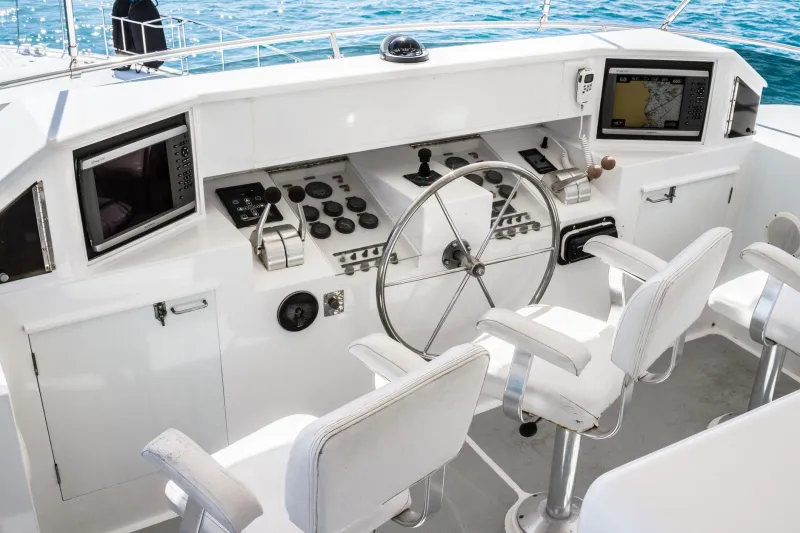
For those seeking the more reflective dimension of charter travel, the considerations are different. A vessel with sufficient range to spend multiple consecutive days offshore. A captain with the experience and temperament to serve as a thoughtful presence rather than a performance. An itinerary that allows for genuine open-water time rather than a rapid succession of ports. And, perhaps most importantly, a willingness on the part of the guest to arrive without an agenda and allow the sea to set the pace.
At Prosline Charters, the curation of these experiences — matching the right vessel, the right captain, and the right itinerary to guests who are seeking something more than scenery — is among the most considered work we do.
The Return to Shore
Those who have undergone this kind of voyage tend to describe their return to land in strikingly similar terms. Not refreshed, exactly — though rest is certainly part of it. Reoriented. As though the coordinates of their inner life have been recalibrated by sustained exposure to something larger and more patient than themselves.
The ocean has always been humanity's most enduring mirror. The captains who understand this — who carry their philosophical acuity as quietly and surely as they carry their navigational expertise — are among the most valuable guides available to anyone willing to leave the dock behind.
Some wisdom, it turns out, can only be found in motion.