From Galley to Table: Why Discerning Travelers Are Choosing Their Charter Yachts by the Chef
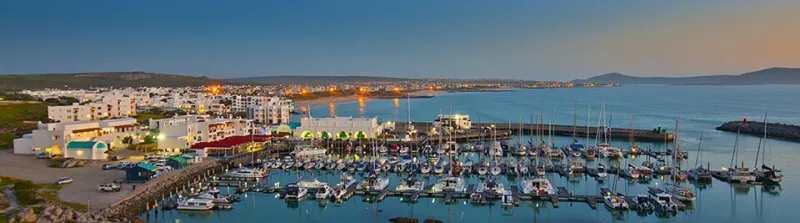
Photo: Hein waschefort, CC BY-SA 3.0, via Wikimedia Commons
For generations, the appeal of a luxury charter voyage rested on the vessel itself — the gleaming teak decks, the thread count of the stateroom linens, the horsepower humming beneath the waterline. Yet something has shifted among America's most discerning travelers. Increasingly, the question asked first is not which yacht, but who is cooking.
A quiet culinary revolution is underway on the water, and it is being led by a cadre of formally trained chefs who have traded the white-tablecloth pressure of land-based restaurants for the intimate theater of the private galley. The result is a dining experience that bears no resemblance to the catered buffets of the past — and one that has become, for many charter guests, the defining reason they return to the sea.
The Galley as a Stage
Speak to any private yacht chef about the fundamental difference between cooking aboard a vessel and cooking in a conventional restaurant, and the word that surfaces most often is intimacy. In a Michelin-starred dining room, a chef may prepare dozens of covers in a single evening, rarely encountering the guests whose palates they are working to impress. Aboard a charter yacht, that distance collapses entirely.
"You are cooking for eight people, and you have known their preferences since before they boarded," explains one private chef who trained under a two-star kitchen in Lyon before transitioning to yacht work in the Caribbean. "There is no menu in the traditional sense. There is a conversation that begins days before the voyage and continues through every meal."
This bespoke approach extends to every element of the dining experience. Menus are constructed around individual dietary philosophies, cultural preferences, and even the specific waters the vessel will traverse. A charter moving through the Florida Keys in late spring will see its table anchored by yellowfin tuna, stone crab, and local mangoes. The same vessel repositioning to the Pacific Northwest in summer will pivot entirely — Dungeness crab, wild king salmon, and foraged coastal greens replacing the tropical pantry almost overnight.
Sourcing at Sea: The Logistical Art Behind Every Plate
What makes the private galley genuinely remarkable is not merely the talent of the chef, but the extraordinary logistical precision required to sustain fine dining standards in a constantly moving environment. Provisioning for a week-long voyage demands the kind of advance planning typically associated with staging a catered gala — and the best private chefs approach it with equivalent seriousness.
Relationships with local fishermen, specialty purveyors, and artisan producers at each port of call are cultivated over years. A yacht chef working the waters off Montauk will know precisely which dock to visit at dawn for the morning's fluke. One working the Gulf of Mexico will have standing arrangements with shrimpers whose boats come in before the charter guests have finished their coffee.
The galley itself presents its own set of challenges. Space is finite, equipment must be secured against the motion of the sea, and the chef must produce food of restaurant caliber without the brigade of sous chefs, line cooks, and prep staff that a comparable kitchen on land would require. It is, by any measure, a more demanding form of culinary craft — and for those who have mastered it, a more rewarding one.
The Menu as Itinerary
Perhaps the most significant departure from conventional fine dining is the way food aboard a luxury charter vessel functions as a narrative thread running through the entire voyage. Rather than a single meal existing in isolation, every breakfast, lunch, and dinner becomes part of a larger culinary story shaped by geography, weather, and the rhythms of life at sea.
Guests who spend a morning fishing alongside the crew may find their catch transformed into a ceviche served at the bow as the sun sets. A morning anchored off a small island might inspire an afternoon cooking demonstration in which the chef invites guests into the galley to participate in preparing that evening's dinner. These moments of engagement blur the line between passenger and participant in ways that no land-based restaurant can replicate.
Some charter operators have begun offering voyages explicitly structured around culinary themes — wine and food pairings developed in consultation with sommeliers, progressive tasting menus that evolve over the course of a week, or immersive introductions to the food cultures of specific coastal regions. The Prosline Charters approach has always centered on the idea that every element of a voyage should be crafted with intention, and the galley is no exception.
Why the Ocean Changes the Way Food Tastes
There is a physiological dimension to this conversation that deserves acknowledgment. Nutritionists and sensory scientists have noted for some time that the marine environment — the salt air, the quality of natural light, the gentle movement of the vessel, the physical activity of a day spent on the water — appears to heighten the appetite and sharpen the senses. Guests consistently report that meals aboard a charter yacht taste more vivid, more present, than equivalent meals consumed ashore.
The absence of ambient noise, the lack of crowded dining rooms, and the uninterrupted attention of a chef whose sole professional focus is the satisfaction of a small group of guests all contribute to an experience that is, by its nature, irreproducible on land. Fine dining in a major American city offers spectacle and prestige. Fine dining at sea offers something rarer: genuine, unhurried presence.
Choosing Your Charter by the Table
For travelers who have not yet considered the chef as a primary criterion in selecting a charter voyage, the conversation is worth beginning. The most thoughtfully curated vessels now offer detailed chef profiles alongside their technical specifications — culinary backgrounds, signature styles, and sample menus that allow prospective guests to assess not only where they will sail, but how well they will eat while doing so.
The maritime world has always rewarded those who approach it with both rigor and curiosity. On the finest charter yachts operating American waters today, that same standard has arrived, decisively, at the dinner table.