Her Ocean: Why Independent Women Are Turning to Private Charters for the Voyage That Belongs Only to Them
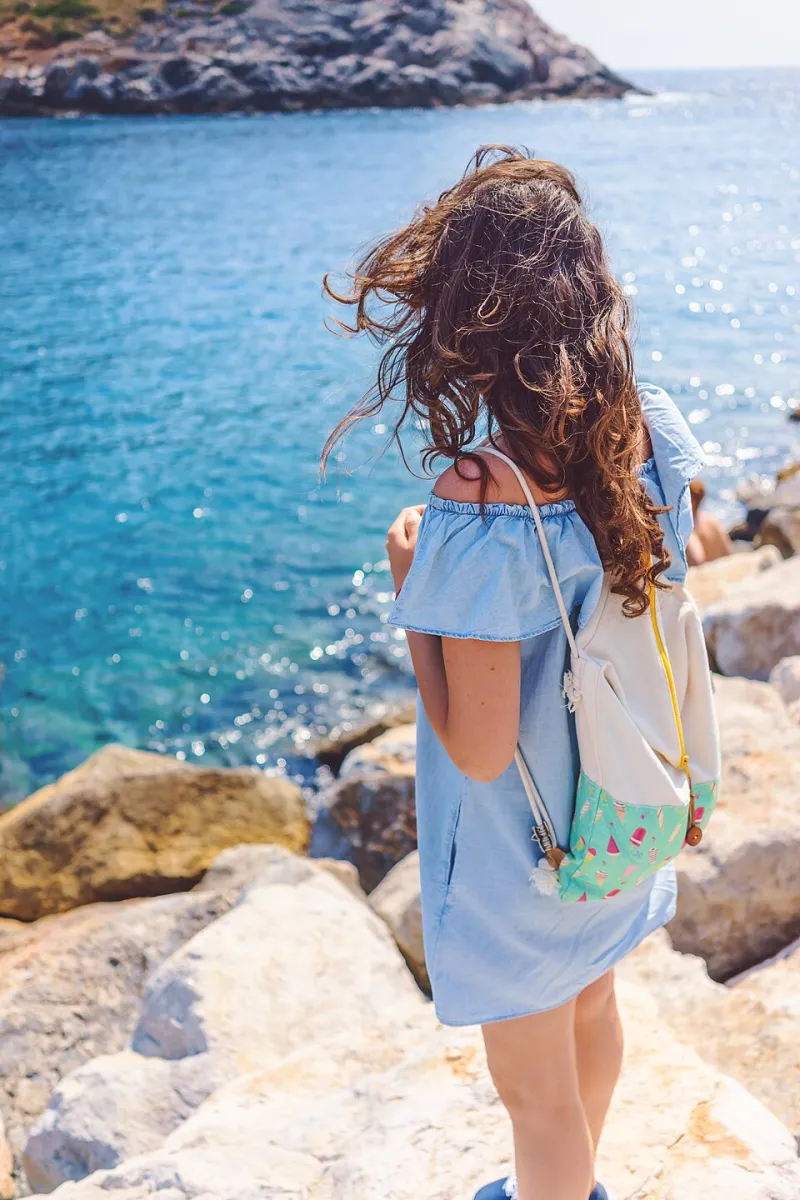
Photo: Alessio Lin lin_alessio, CC0, via Wikimedia Commons
There is a particular kind of freedom that arrives only when the dock lines are cast off and the familiar coastline begins to recede. For a growing number of American women, that moment — unhurried, unshared, and entirely self-directed — has become the most sought-after luxury in contemporary travel.
Solo female charter guests represent one of the most significant and quietly transformative shifts in the luxury maritime industry. They are executives, entrepreneurs, physicians, artists, and retirees. They range in age from their late thirties to their seventies. What they share is a refusal to wait for the right companion before claiming the experience they want — and an instinct, increasingly well-founded, that the ocean offers something no other travel environment can.
The Autonomy That Land-Based Travel Cannot Provide
Group tours offer companionship but surrender control. Resort vacations provide comfort but deliver a curated sameness. Even the most thoughtfully planned land itinerary requires the solo traveler to navigate public spaces, shared transportation, and the social dynamics of environments designed for groups.
A private charter voyage reorders all of this. The vessel, the crew, the schedule, and the itinerary belong entirely to the guest. Meals are prepared according to personal preference. Departure times are set by desire rather than by airline schedules. The decision to anchor in a quiet cove for an afternoon, or to push further along the coast to catch a particular sunset, rests with no one but the traveler herself.
"I had spent twenty years making decisions for other people," says a Chicago-based attorney who chartered a 60-foot sailing vessel through the British Virgin Islands for ten days. "The first morning I woke up at sea and realized that absolutely nothing would happen that day unless I chose it — that was more restorative than any vacation I had ever taken."
This quality of sovereign experience is not incidental to the appeal of solo charter travel. For many women, it is the entire point.
The Psychology of Maritime Solitude
Psychologists who study restorative travel have long observed that environments characterized by natural expansiveness — open sky, uninterrupted horizon, the sound of water — engage the nervous system differently than built environments, even beautiful ones. The ocean, specifically, has a quality of scale that tends to diminish the mental noise of professional and domestic life in ways that a luxury hotel room, however elegantly appointed, simply cannot.
Solitude at sea is also a qualitatively different experience than solitude on land. There is no ambient pressure to be productive, no familiar social obligations, no digital infrastructure demanding attention. Many solo charter guests describe the experience as the first extended period in years during which they felt genuinely unreachable — and genuinely at ease with that state.
For women who occupy positions of significant professional responsibility, the psychological relief of this temporary disappearance carries particular weight. The ocean does not require performance. It asks only for presence.
Safety, Comfort, and the Professional Crew
For women considering a solo charter for the first time, questions of safety and comfort aboard are reasonable and worth addressing directly. A reputable charter operation employs professional crews who are trained not only in seamanship and emergency protocols, but in the art of attentive, unobtrusive hospitality. The relationship between a solo guest and a skilled crew is one of genuine service — present when needed, respectful of privacy when not.
At Prosline Charters, the vetting of crew members includes background verification and extensive service training. Solo guests are encouraged to communicate their preferences for interaction clearly before departure — some wish to dine with the captain and learn about navigation; others prefer complete solitude broken only by the delivery of meals and the management of the vessel. Both are entirely valid, and both are accommodated without question.
Port security, itinerary flexibility, and communication protocols are discussed thoroughly during the pre-voyage consultation. The goal is to ensure that a solo traveler boards with complete confidence — not only in the vessel and crew, but in her own ability to shape the experience as she sees fit.
What Women Are Actually Seeking at Sea
Conversations with solo female charter guests reveal a set of motivations that are more varied and nuanced than the broad category of "wellness travel" might suggest. Some arrive seeking genuine intellectual engagement — books unread, creative projects deferred, questions about their own lives that have gone unexamined in the press of daily obligation. The structured solitude of a charter voyage provides the cognitive space that these pursuits require.
Others come for physical adventure. Sport fishing, snorkeling, paddleboarding, and open-water swimming are all accessible from a well-equipped charter vessel, and many solo guests find that the freedom to pursue these activities at their own pace — without accommodating a group's varying levels of interest or ability — transforms them from occasional diversions into genuine passions.
A retired educator from the Pacific Northwest who spent two weeks chartering along the coast of Maine described her experience with characteristic precision: "I wasn't running away from anything. I was running toward the version of myself that only seems to exist when no one is watching."
Designing the Solo Voyage
The practical architecture of a solo charter differs from a group voyage in several meaningful ways. Vessel selection should account for single-occupancy comfort — a yacht that feels spacious and well-proportioned for one guest rather than merely adequate. The crew-to-guest ratio aboard a solo charter is, by definition, generous, which allows for a level of personalized service that group travel cannot approach.
Itinerary design for a solo traveler also benefits from built-in flexibility. Unlike a group charter, where consensus governs daily decisions, a solo voyage can evolve organically in response to weather, mood, and spontaneous discovery. The best charter consultants will build this adaptability into the plan from the outset rather than treating the itinerary as fixed.
The ocean has always rewarded those who approach it with intention and courage. For the women now claiming it as their own — on their own terms, in their own time — it is returning the favor generously.