The Voyage as Inheritance: How Wealthy American Families Are Chartering Yachts to Carry Their Legacies Forward
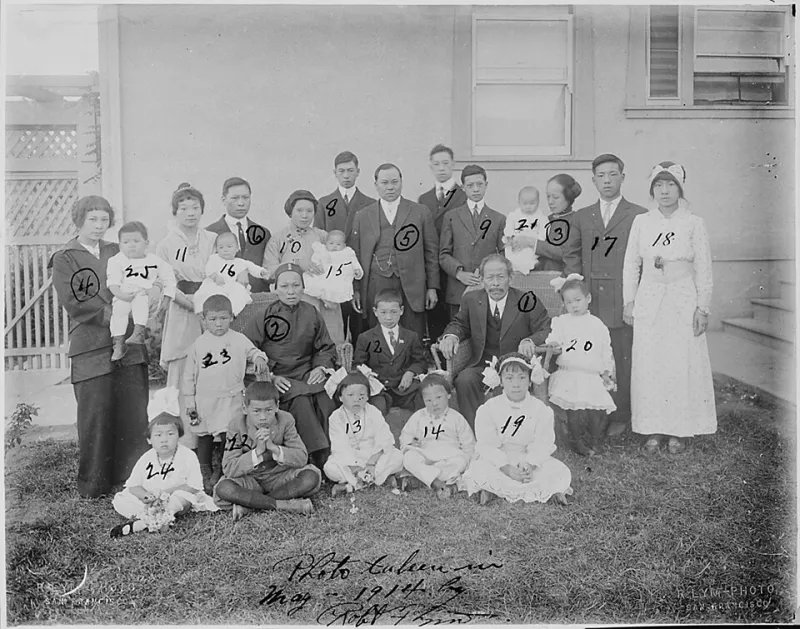
Photo: Unknown authorUnknown author or not provided, Public domain, via Wikimedia Commons
There is a particular kind of wealth that no estate attorney can document and no trust can protect. It lives in the stories a grandmother tells about how the family arrived at where it is. It lives in the patience a grandfather demonstrates when teaching a grandchild to read a nautical chart. It lives in the conversations that happen not because anyone planned them, but because the circumstances made them inevitable.
America's most thoughtful affluent families have always understood that the transmission of this intangible inheritance is both the most important and the most fragile task in front of them. And an increasing number of those families are discovering that the most reliable environment in which to accomplish it is not a boardroom, not a holiday gathering, and not a family retreat center. It is a private charter yacht, moving steadily through open water, with nowhere else to be.
Why the Yacht Changes the Equation
The psychology of multi-generational connection is well-documented and consistently sobering. Modern American family life, even among the most financially privileged households, is characterized by fragmentation. Schedules diverge. Screens intervene. Geographies separate. The moments in which three or four generations are genuinely present to one another — not merely occupying the same room but actually attending to one another — have become vanishingly rare.
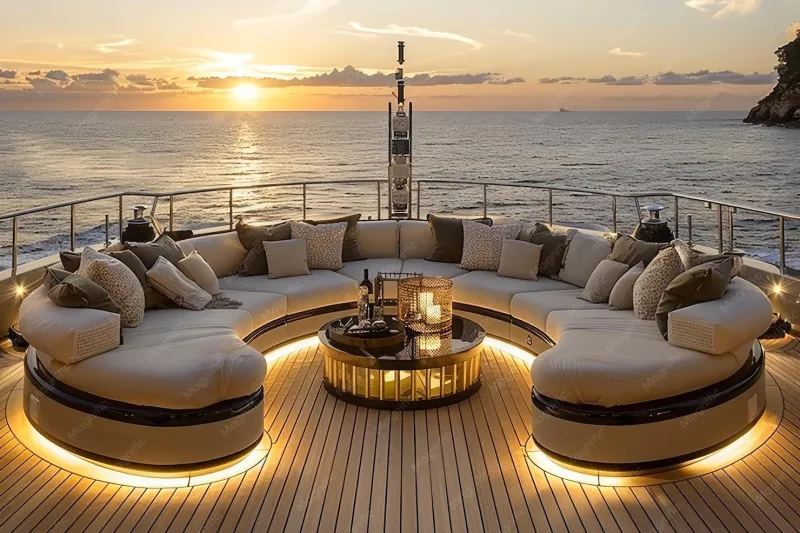
The charter yacht addresses this problem not through exhortation but through architecture. The vessel is, by its nature, a contained world. There is no leaving for an errand, no retreating to a separate wing, no quiet disappearance into individual itineraries. The family shares meals, shares mornings, shares the particular intimacy of watching the same sunset from the same deck. The boundaries of the vessel become, paradoxically, a form of liberation — a permission structure for the kind of unhurried presence that shore-based life rarely permits.
Families who have undertaken multi-generational charter voyages frequently report that conversations began at sea that had been waiting, sometimes for years, to happen. The removal of the ordinary distractions of daily life creates a kind of psychological clearing in which subjects that feel too large or too important for a phone call become, somehow, approachable.
Designing the Voyage as a Rite of Passage
The families approaching this practice most intentionally are doing something more structured than simply booking a boat and hoping for the best. They are designing their voyages with explicit purpose — treating the charter experience as a curated rite of passage rather than an unstructured holiday.
For some families, this means selecting a destination with direct significance to their heritage. A family whose patriarch immigrated through the port of Miami might navigate the waters of Biscayne Bay and the Florida Keys, with the elder generation sharing memories against the backdrop of the actual geography. A family with deep New England roots might charter along the coast of Maine, tracing the same waters their ancestors worked. When the setting carries meaning, the stories told within it carry more.
For others, the design centers on skill transmission. A grandfather who built his fortune through discipline and precision might spend mornings teaching his grandchildren celestial navigation or the fundamentals of seamanship — not because they will need these skills professionally, but because the act of teaching and learning together communicates something about rigor, patience, and the value of mastering difficult things. The lesson is never entirely about the skill.
Prosline Charters works with families at this planning stage with considerable care, understanding that the logistical elements of a charter voyage — vessel selection, itinerary design, crew configuration — are inseparable from the experiential outcomes the family is seeking. A vessel that comfortably accommodates three generations without sacrificing privacy is a different vessel than one designed for a couple. An itinerary that balances shared activity with the quiet time that allows organic conversation to develop is a different itinerary than one built around aggressive port-hopping.
The Stories That Only the Ocean Can Draw Out
There is something about the rhythm of life aboard a yacht — the long, unhurried mornings, the afternoons shaped by wind and weather, the evenings that settle naturally into reflection — that loosens the reservations people carry about sharing the deeper chapters of their lives.
Elders who have spent decades deflecting questions about the harder years, the formative decisions, the values forged in difficulty, often find that the ocean creates conditions in which those stories become available. Perhaps it is the removal of the ordinary social performance that shore life requires. Perhaps it is the presence of younger generations who are, for once, genuinely listening rather than half-attending to something else. Perhaps it is simply the perspective that comes from looking at a horizon that has no visible end.
Whatever the mechanism, the families who have made multi-generational voyages a recurring practice speak of the experience in terms that go well beyond the vocabulary of leisure. They speak of things said at sea that reshaped how younger members of the family understood their inheritance — not the financial inheritance, but the one that preceded it. The resilience. The principles. The particular way of engaging with the world that made the financial success possible in the first place.
Building a Family Narrative That Endures
Psychologists who study family cohesion consistently identify the strength of a family's shared narrative as one of the most reliable predictors of resilience across generations. Families that know their own story — that have a coherent, shared understanding of where they came from, what they have overcome, and what they stand for — demonstrate stronger individual outcomes in their members, including greater psychological stability, more robust professional achievement, and more durable relationships.
The challenge is that shared narratives require shared experiences to build upon. They require the kind of moments that become reference points — the afternoon the whole family watched a storm roll in from the west, the morning a twelve-year-old successfully docked the tender for the first time, the evening the conversation at the stern table went on long after the dishes were cleared and the stars came out fully.
These moments do not happen by accident. They happen in environments designed to allow them. And for families serious about the work of legacy, the private charter yacht has proven itself, again and again, to be that environment.
The Voyage Worth Planning
The families who return to the water year after year — who make the multi-generational charter voyage a fixed point in the family calendar rather than a one-time event — often describe a cumulative effect that surprises them. Each voyage adds a new layer to the shared narrative. The youngest members of the family grow into it, eventually becoming the ones who carry it forward.
That, in the end, is what legacy has always meant: not the transfer of assets, but the transfer of meaning. The ocean, it turns out, has always been an exceptionally good place for that kind of work.